
The Ultimate 10-Day Morocco Itinerary
Morocco packs an extraordinary range of landscapes and experiences into…
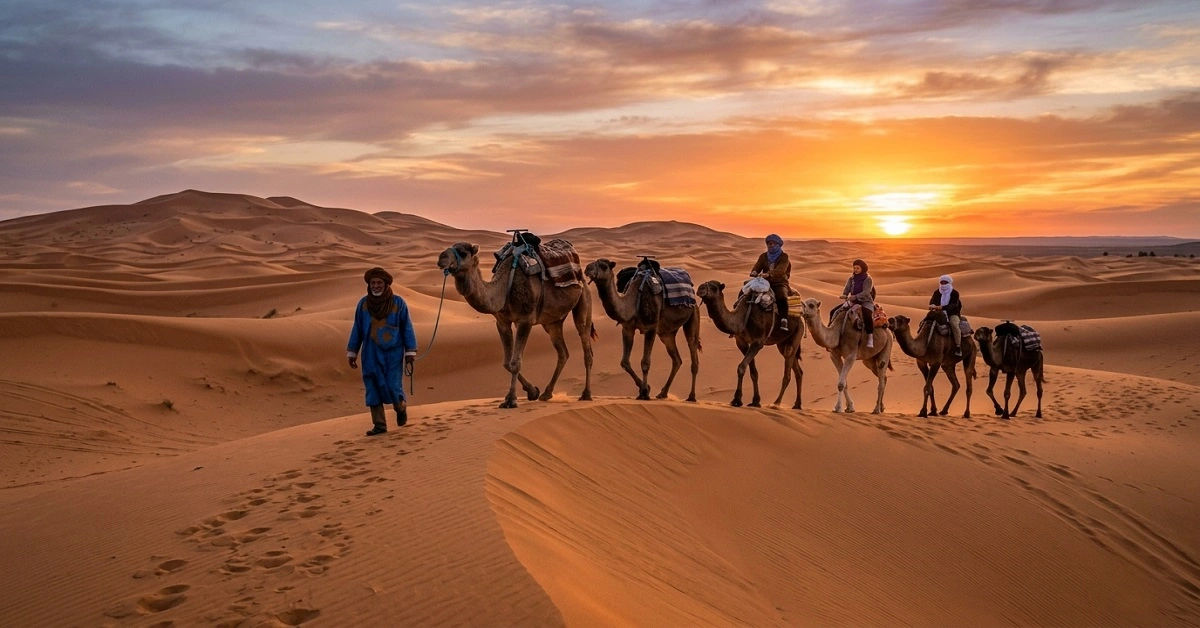
Morocco packs an extraordinary range of landscapes and experiences into a country roughly the size of California — walled medieval cities, snow-capped mountains, Sahara sand dunes, and a rugged Atlantic coastline all within a manageable driving distance of each other. Ten days is enough time to see the country’s essential highlights without feeling rushed, provided the route is planned efficiently.
Below is a day-by-day framework covering Morocco’s most iconic stops, how to move between them, and what to prioritize along the way.
Planning Your 10-Day Morocco Route
Before mapping out daily stops, it’s worth understanding how most 10-day Morocco itineraries are structured and how travelers typically get around.
The Classic Marrakech–Sahara–Fez Loop
The most popular 10-day route runs as a loop or one-way journey connecting Marrakech, the Sahara Desert (via the Atlas Mountains and Dades/Todra Gorges), and Fez, often with Chefchaouen added at the end. A well-balanced split looks like:
- Days 1–3: Marrakech (medina, souks, day trip options)
- Days 4–6: Atlas Mountains, gorges, and the Sahara Desert (Merzouga)
- Days 7–8: Fez (medina, tanneries, historic sites)
- Days 9–10: Chefchaouen (the “Blue City”) or return to Marrakech for departure
This route avoids backtracking and covers Morocco’s core contrasts — imperial cities, mountains, and desert — in a logical geographic sequence.
Private Driver vs. Self-Driving vs. Organized Tour
Most travelers hire a private driver-guide for the Marrakech-to-Fez desert route, since it covers mountain passes and long stretches where public transport is limited and a knowledgeable guide adds significant value. Self-driving is possible but requires confidence navigating mountain roads and medina-adjacent parking; organized multi-day tours are a solid option for travelers who prefer a fixed itinerary and shared group costs over flexibility.
Days 1–3: Marrakech and the Atlas Mountains
Marrakech is the natural starting point for most Morocco itineraries, offering an immersive introduction to Moroccan culture before heading toward the desert.
Exploring Marrakech’s Medina and Souks
Spend at least one full day wandering Jemaa el-Fnaa square and the surrounding souks, where individual sections specialize in leather, spices, textiles, and metalwork. The Bahia Palace, Saadian Tombs, and Majorelle Garden (Yves Saint Laurent’s restored botanical garden) round out the city’s must-see sites, and a rooftop dinner overlooking the medina is a fitting way to end a day here.
A Day Trip Through the Atlas Mountains
Whether or not it’s part of the longer Sahara route, a day trip into the High Atlas Mountains — through villages like Imlil or the Ourika Valley — offers a scenic break from the city with Berber villages, waterfalls, and mountain trails, all within about an hour or two of Marrakech.
Days 4–6: The Sahara Desert via Dades and Todra Gorges
The multi-day drive from Marrakech to the Sahara is as much a part of the experience as the desert itself, crossing dramatic mountain passes and river gorges along the way.
Crossing the High Atlas via Tizi n’Tichka Pass
The drive out of Marrakech typically crosses the Tizi n’Tichka Pass, Morocco’s highest major mountain pass, with stops at the UNESCO-listed Ksar of Ait Ben Haddou — a fortified clay village used as a filming location for numerous productions — before continuing toward the gorges.
Camel Trekking and Camping in Merzouga
Merzouga, on the edge of the Erg Chebbi dunes, is the most common base for Sahara excursions, where travelers typically ride camels out to a desert camp for an overnight stay under the stars. Sunrise or sunset over the dunes is the highlight for most visitors, and camps range from basic shared tents to more comfortable “luxury desert camp” setups with private accommodations.
Days 7–10: Fez and Chefchaouen
The final stretch of the itinerary heads north to Morocco’s spiritual and intellectual capital, then on to one of the country’s most photogenic small towns.
Fez’s Medina and the Chouara Tannery
Fez el-Bali, the old medina, is considered one of the largest car-free urban areas in the world and is best explored with a local guide given its maze-like layout. The Chouara Tannery, where leather has been dyed using traditional methods for centuries, offers a striking (and pungent) look at one of the city’s oldest industries from surrounding viewing terraces.
Chefchaouen’s Blue Streets Chefchaouen, roughly four hours from Fez, is known worldwide for its blue-painted buildings and relaxed mountain-town atmosphere, making it a fitting, lower-key finish to the trip. A day here is typically enough to wander the old town, photograph the blue alleyways, and hike up to the Spanish Mosque viewpoint above the city before departing from Tangier or looping back to Casablanca for an international flight.